
We were honored to invite Jimmy Lee, Assistant Researcher at the School of Urban Design, Digital Architecture Research Institute of Wuhan University, to deliver a guest lecture on artificial intelligence methods for urban environmental research. We appreciated his clear explanation of how AI techniques can support urban morphology analysis, environmental simulation, and data-driven design. His visit provided valuable insight for our ongoing research.
Nature AI Lab
2025-11-07
Urban Morphology Indicators and Clustering
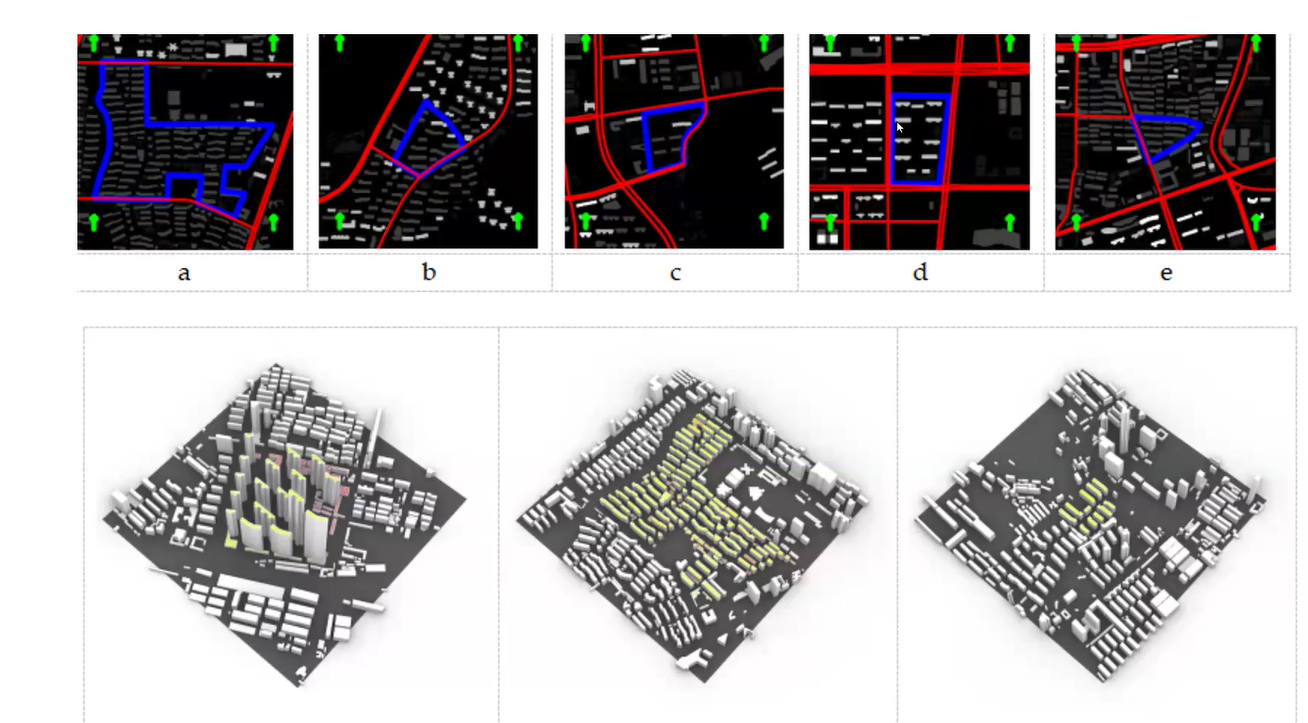
The lecture introduced a set of morphological indicators, including BAR, BSA, MBS, FAR, OAS, and BTC. These indicators help evaluate the structure of urban blocks and the distribution of built forms. Jimmy Lee showed how clustering methods, such as PCA, K-means, DBSCAN, and GMM, can group blocks into typical morphological categories. These typical samples support further environmental simulation, including solar photovoltaic potential and performance testing.
Sampling and Machine Learning Prediction Models
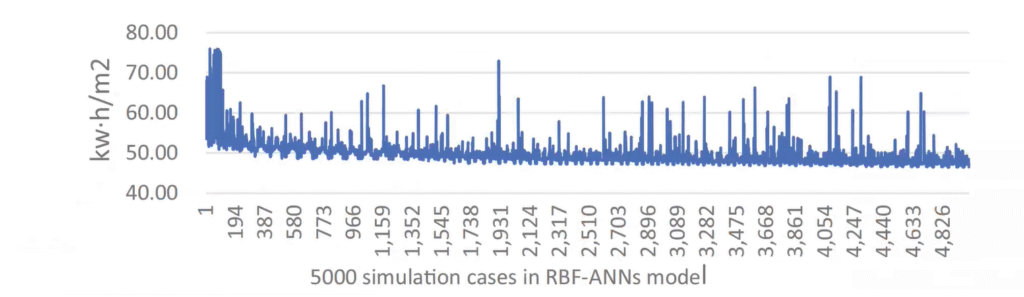
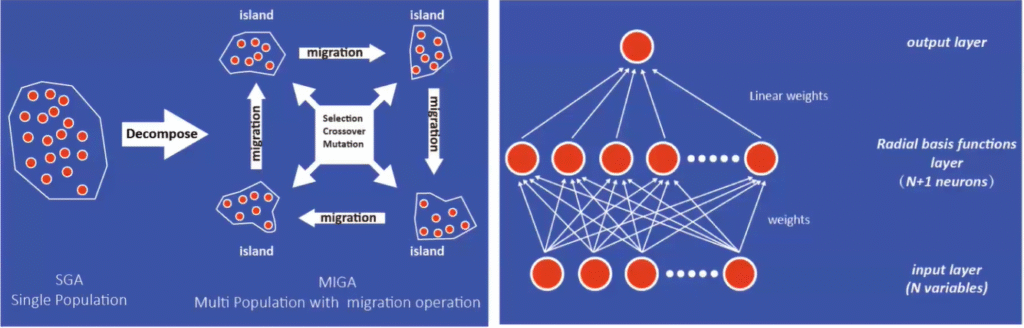
The lecture highlighted the use of sampling strategies and machine learning models to build prediction systems. Jimmy Lee showed examples of RBF-ANNs that predict environmental performance based on thousands of simulation samples. Machine learning models help identify patterns in the data and improve the accuracy of performance prediction across large urban datasets.
Optimization Algorithms for Urban Performance
Jimmy Lee explained how optimization algorithms, such as single-population genetic algorithms (GA) and multi-island genetic algorithms (MIGA), can refine prediction results. These algorithms help identify design strategies that improve environmental performance, such as increased energy efficiency or reduced environmental impacts. The lecture demonstrated how these methods can automatically search for optimal solutions based on the outputs of prediction models.
Semantic Segmentation and Urban Model Generation
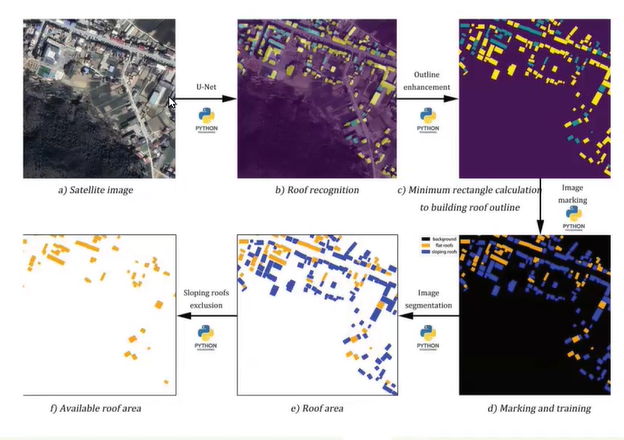
Lee presented semantic segmentation techniques based on convolutional neural networks (CNNs), with U-Net as a primary architecture. These methods enable accurate identification of roofs, vegetation, and urban textures from satellite and street-level imagery. He further demonstrated how CNN-based segmentation can be combined with parametric modelling approaches to extract detailed digital representations of urban areas. After the urban model is generated, parametric tools allow effective configuration and adjustment of model parameters. The integrated workflow supports multi-scenario simulations, such as material selection, solar photovoltaic potential estimation, energy output prediction, and assessments of environmental impacts.
Generative Models for Urban Form Exploration
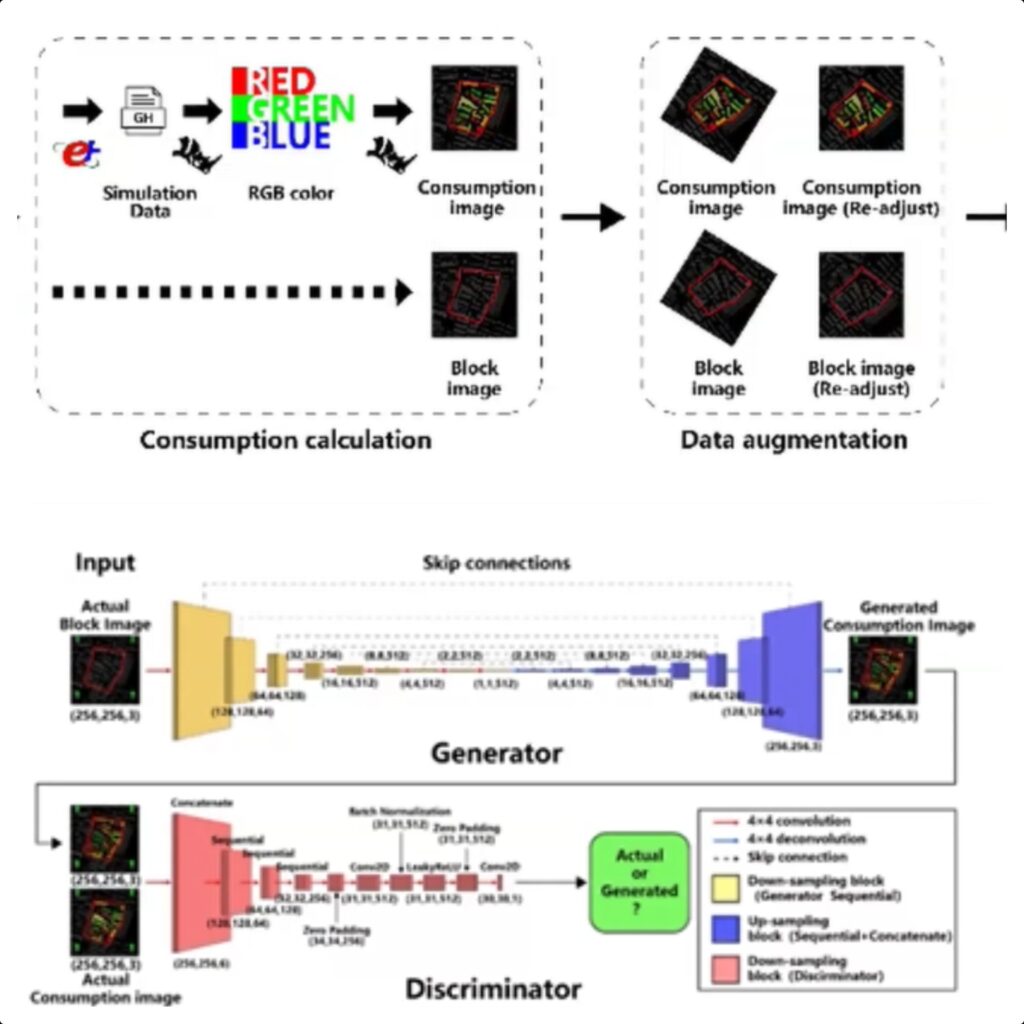
The lecture included examples of using generative adversarial networks (GANs) to produce simulated images of urban blocks and their environmental performance. GANs can produce diverse and controllable design variations. Jimmy Lee showed how parameter-based methods are used to guide the adjustment, selection, and evaluation of generated design options.
Graph Neural Networks for Spatial Topology and Explainability
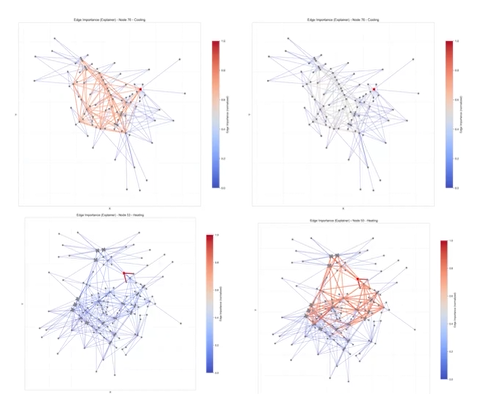
Lee also introduced graph neural networks (GNNs) as tools to analyze spatial topology and building relationships. He demonstrated how GNNExplainer reveals feature importance, such as height, area, and street angle, and how it highlights key edges that influence spatial patterns. These methods improve the interpretability of AI models and provide insights into the structure of urban networks.