
Nature AI Lab
News
Latest publications, teaching, guest lectures, conferences, and collaborations from the lab.
-
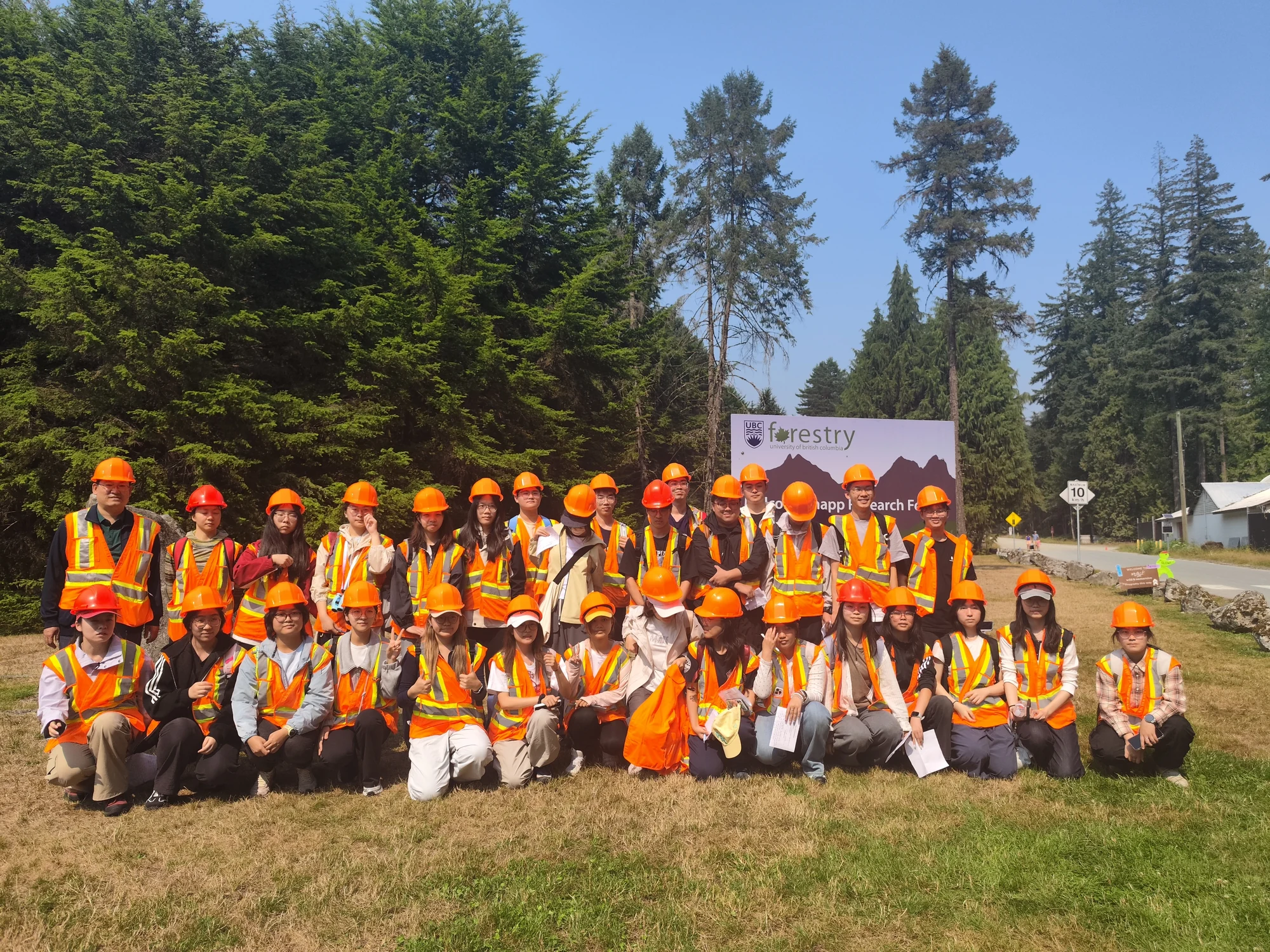
What AI Can See, What Students Notice: Learning from Urban Nature
Across two UBC Forestry Summer Institute courses, 60 students connected ecological and public-health questions with digital tools, field observation and evidence-grounded action.
-
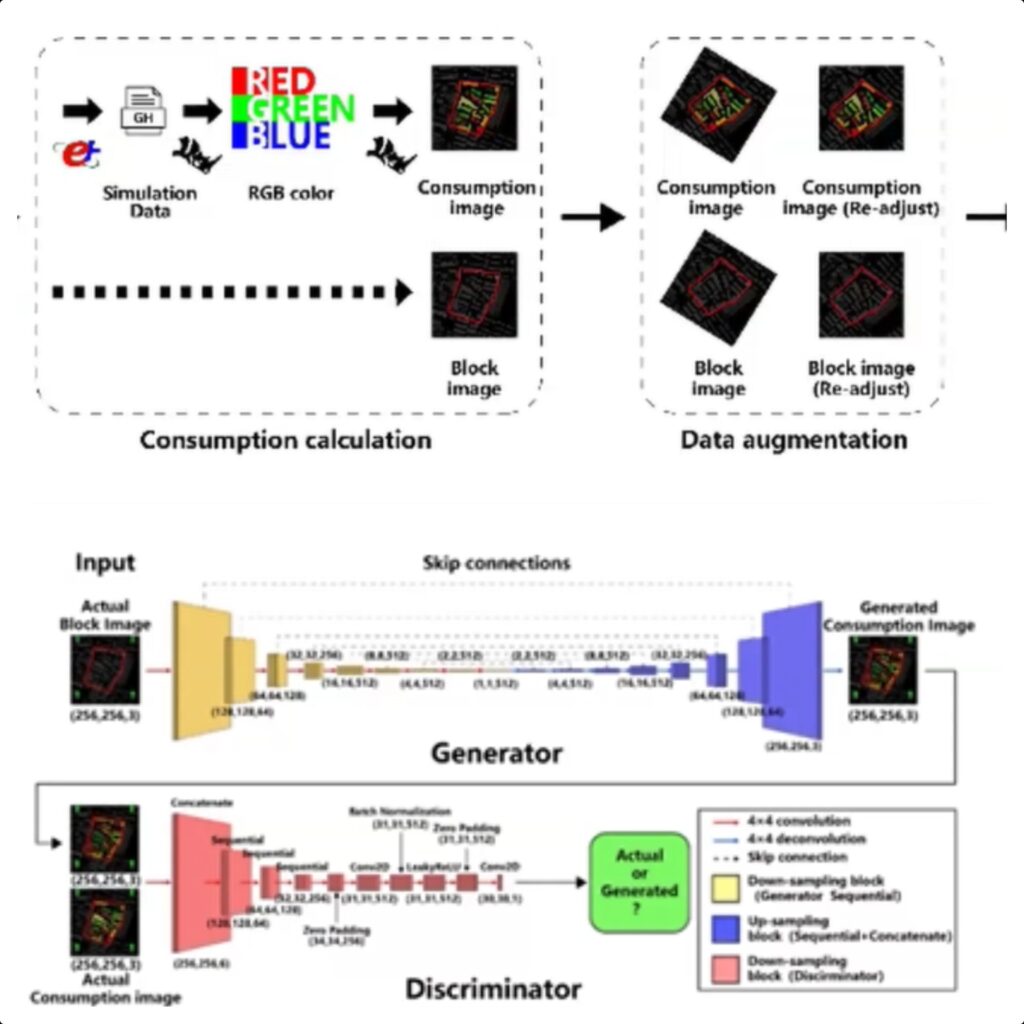
Guest Lecture: Artificial Intelligence Methods for Urban Environmental Research
We hosted Jimmy Lee (Digital Architecture Research Institute, Wuhan University) for a guest lecture on AI methods for urban environmental research — covering urban morphology analysis, environmental simulation, and data-driven design.
-
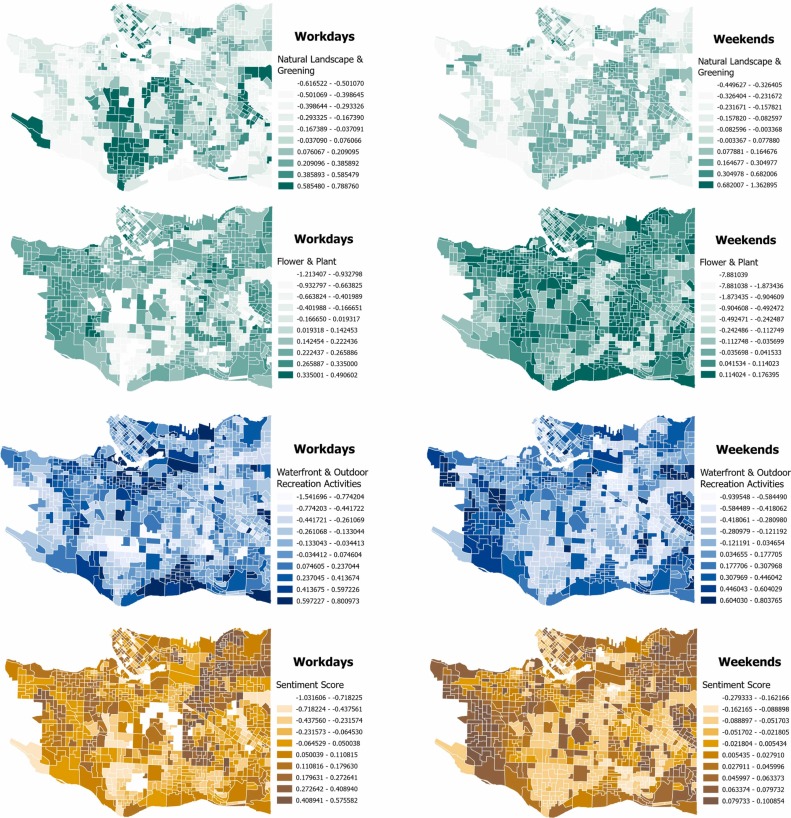
New Paper: Evaluating the Spatial-Temporal Impact of Urban Nature on Urban Vitality in Vancouver
Land Use Policy published our machine-learning framework assessing how urban greenery shapes urban vitality across space and time — integrating seasonal remote sensing (NDVI, BGCI, LST) with social-media vitality indicators across working days and holidays.
-
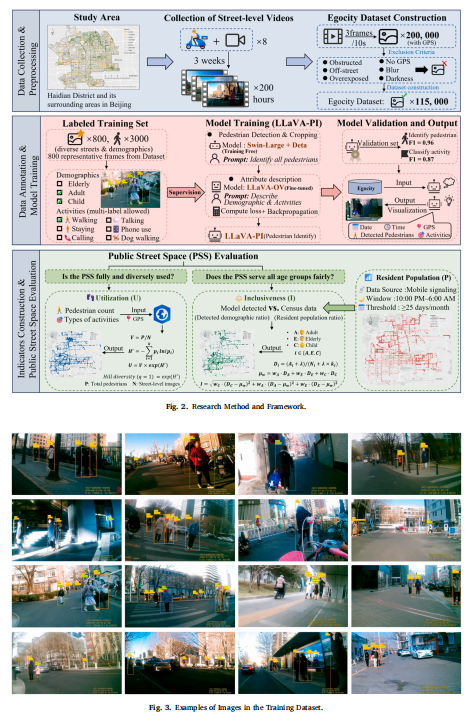
New Paper: Who Gets to Use the Street? Utilization and Inclusiveness via Crowdsourced Videos and Vision-Language Models
Sustainable Cities and Society published our scalable framework combining crowdsourced delivery-rider videos (EgoCity) with a custom vision-language model (LLaVA-PI) to measure street utilization and inclusiveness — only 4.9% of streets achieve both.
-
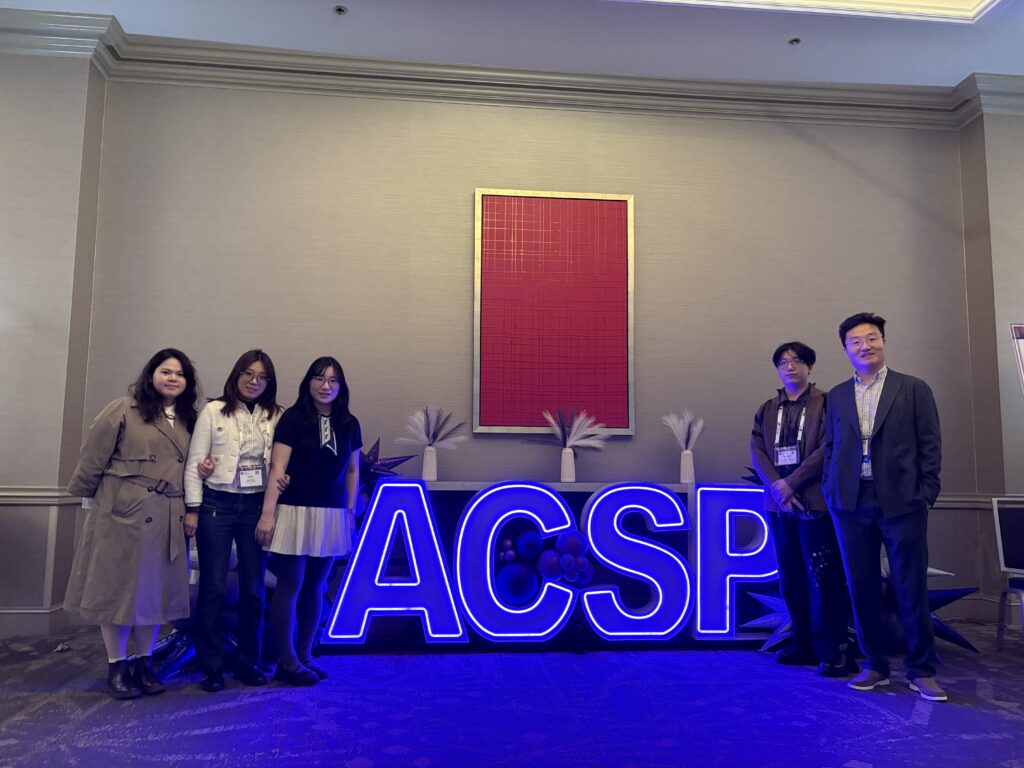
Conference: The 2025 ACSP Annual Conference in Minneapolis
Our team joined the 65th ACSP Annual Conference (Oct 23–25, Minneapolis). Led by Mingze Chen, with Xiamengwei Zhang, Yidong Yang, and Xiao Wang taking part in sessions and discussions on research application and interdisciplinary methods.
-
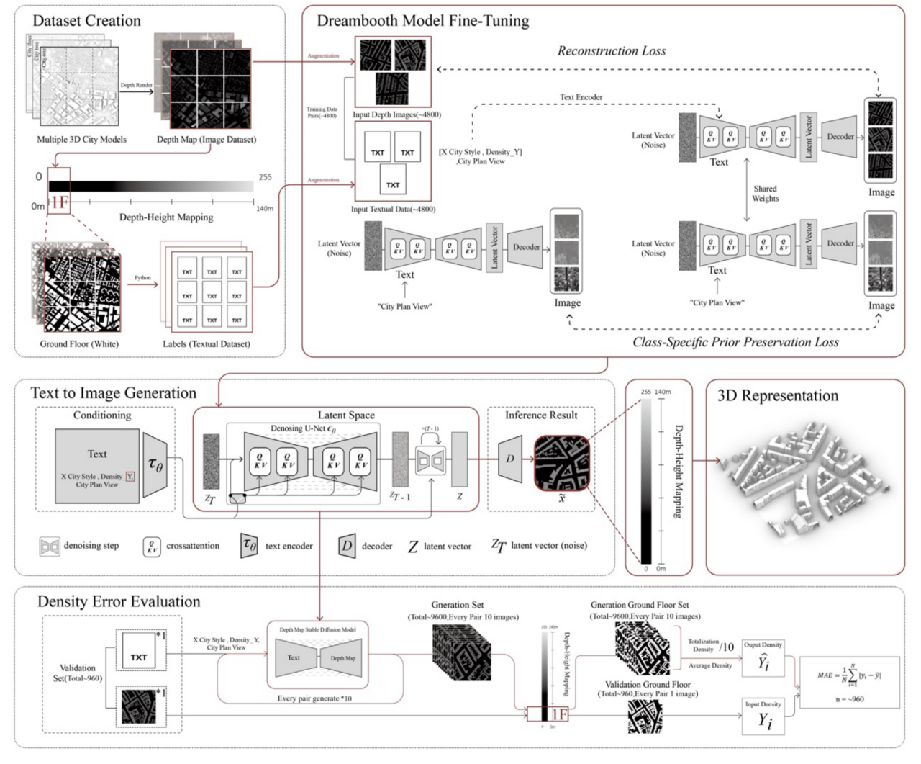
Guest Lecture: Generative Model for Urban Design and Planning
We welcomed Guanhong Li (National University of Singapore) for a guest lecture on diffusion models and LLMs in urban design, cultural modeling, and planning evaluation.
-
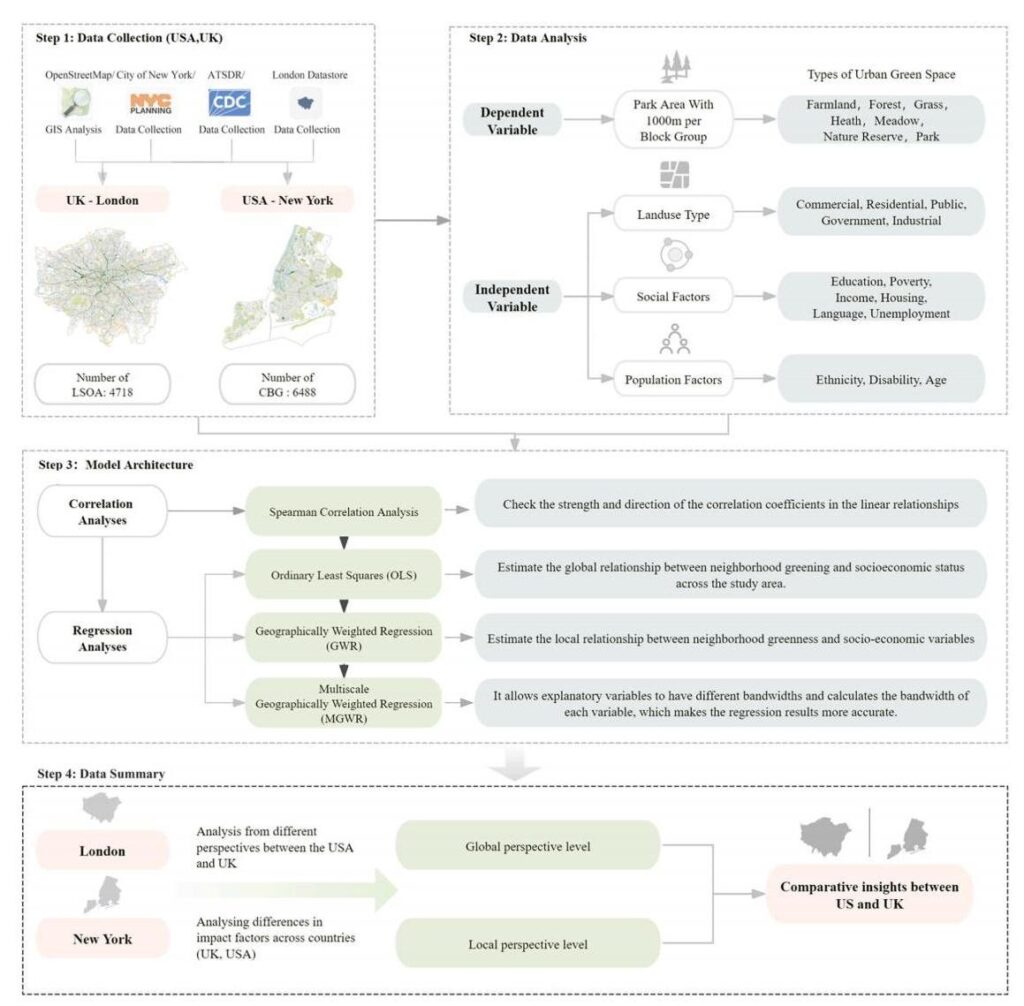
New Paper: Comparative Analysis of Greenery Inequalities in New York and London
Urban Forestry & Urban Greening published our comparative study of green-space inequality in New York and London, integrating multiscale spatial modeling (OLS, GWR, MGWR) with census and land-use data to reveal how income, race, education, and the built environment shape green accessibility.
-
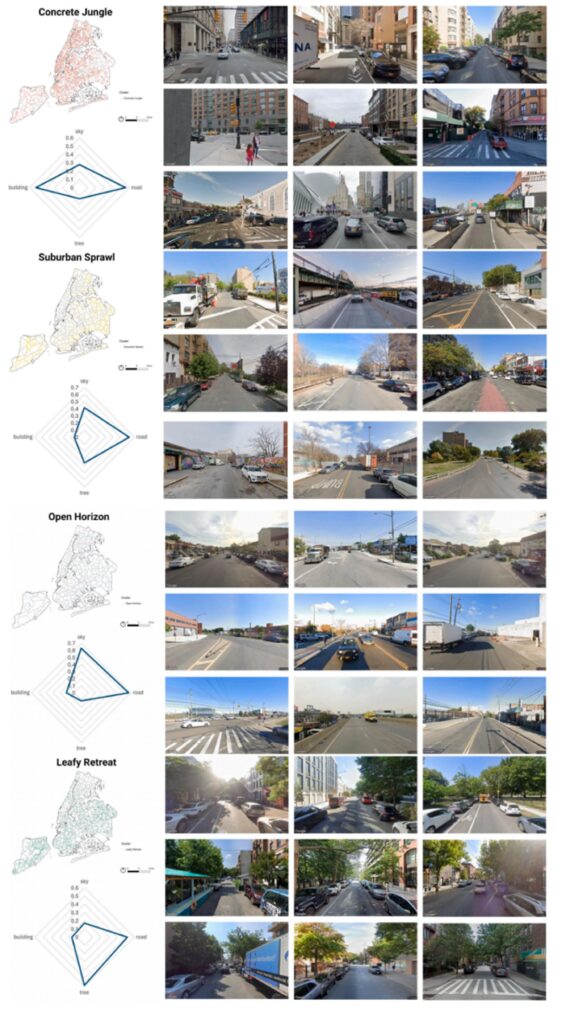
New Paper: Urban Scene Types and Heat Island Risk in NYC — Insights from Interpretable Machine Learning
Urban Climate published our study of urban scene types and the heat-island effect in NYC, using interpretable machine learning (SHAP, ALE, counterfactuals) to show how building height, vegetation, and socio-economic disparities shape land surface temperature.
-
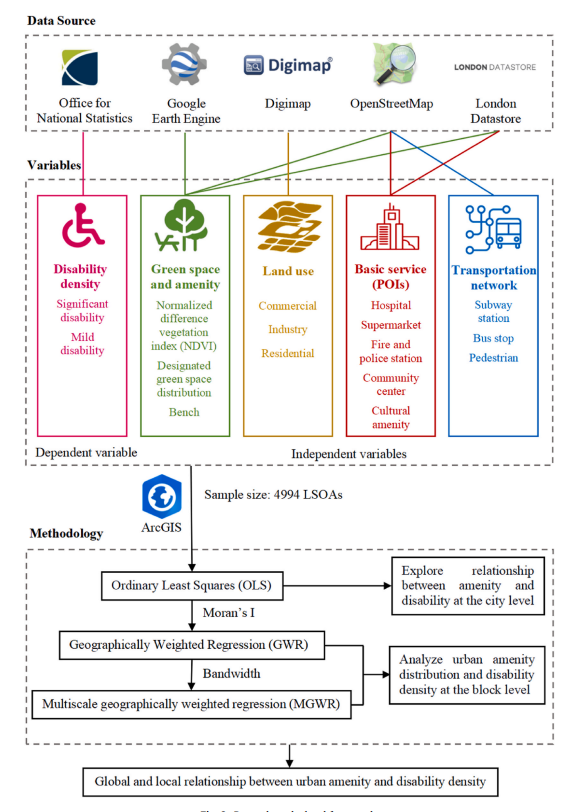
New Paper: Urban Amenity Equity for People with Disabilities in London — Insights from Multiscale GWR
Habitat International published our study on urban amenity equity for people with disabilities in London, using multiscale GWR to reveal disparities — especially in access to high-quality green spaces and commercial areas — and to call for disability-inclusive urban planning.
-
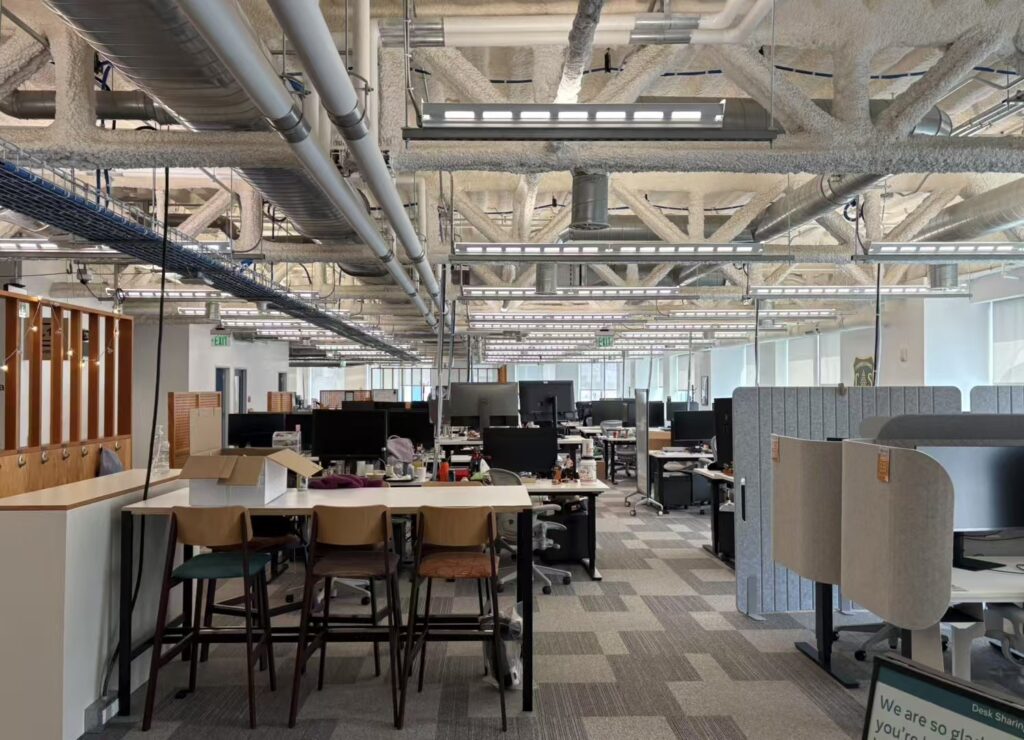
Collaboration Insight: At the Intersection of AI and Urban Landscapes — Visit to Meta Boston
A visit to the Meta Boston office exploring the intersection of AI and urban landscapes — with thanks to Marcie Hogan for the warm welcome and a thoughtful tour, and inspired by the fusion of art and technology throughout the space.
-
New Paper: Perception vs. Physical Environment in Shaping Public Visitation Across COVID-19 Stages
Urban Forestry & Urban Greening published our COVID-era study of public-space visitation in Las Vegas, combining machine learning, GPS, and review data to compare the nonlinear effects of physical environment and human perception — and the divergent resilience of parks and commercial areas.

-
New Paper: Measuring Pedestrian-Level Street Greenery Visibility with Space Syntax and Crowdsourced Imagery
Our London study introduces a framework to quantify and map how pedestrians perceive street greenery, using space syntax metrics and crowdsourced imagery for more informed urban planning and design.

-
New Paper: Measurement Tools and Senior Engagement in Urban Nature
Health & Place published our systematic review of tools for measuring senior behavior in urban nature, highlighting health benefits and behavioral patterns.

-
New Paper: Advancements in Supervised Machine Learning for Outdoor Thermal Comfort
Energy & Buildings published our systematic review of advancements in supervised machine learning for outdoor thermal comfort — across scales, applications, and data types — to refine predictive methods for urban climatic challenges.

-
New Paper: The “Blue” Habitat of Urban & Suburban Areas and Approaches for Its Biodiversity Research
Journal of Environmental Management published our scoping review of the “blue” habitat of urban and suburban areas — examining aquatic ecosystems, biodiversity challenges, and interdisciplinary methodologies for sustainable conservation.

-
Conference: The 2024 ACSP Annual Conference in Seattle
We presented “Defining Urban Vitality Using Image-based, Text-based, and GPS Data” at the 2024 ACSP Annual Conference in Seattle, under the guidance of Dr. Keunhyun Park.
